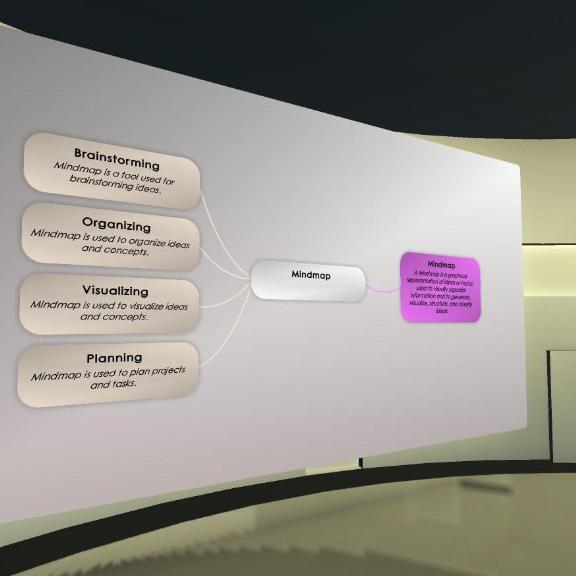
Mindmapping is commonly used for brainstorming, problem-solving, planning, and organizing information.
It was popularized by Tony Buzan, who introduced the concept in the 1970s.
Mindmapping can be done manually using a pen and paper or with digital tools and software.
Studies have shown that mindmapping enhances learning and knowledge retention.
Mindmaps can be personalized and customized to suit an individual's learning style and preferences.
The use of colors, symbols, and images in mind maps boosts memory and cognitive processes.
Mindmapping can be particularly useful for remembering complex information or sequences.
The use of keywords and brief phrases in mind maps reinforces memory recall.
Regular practice with mindmapping can strengthen the brain's associative memory processes.