× Expanded Image
Hover
Title

Description

Read more
×

How to use a SWOT and a Business Model Canvas

Learn how to effectively use a SWOT analysis and a Business Model Canvas to analyze and strategize your business.
Check Business Model Canva...

What is a SWOT analysis?

A SWOT analysis is a strategic planning tool used to evaluate the Strengths, Weaknesses, Opportunities, and Threats of a business or project. It helps businesses identify their internal strengths and weaknesses and external opportunities and threats, which can then be used to develop strategies and make informed decisions.

SWOT analysis acronym stands for Strengths, Weaknesses, Opportunities, and Threats.

It assesses both internal and external factors that can impact a business.

SWOT analysis can be done for an entire business or a specific project.

How to perform a SWOT analysis?

To conduct a SWOT analysis, follow these steps:

1. Identify strengths: Determine what your business does well, including unique resources, capabilities, and advantages over competitors.
2. Define weaknesses: Identify areas where your business may be lacking or vulnerable, such as weak financials, limited market share, or lack of resources.
3. Explore opportunities: Recognize external factors that could benefit your business, such as emerging markets, new technologies, or changing customer needs.
4. Assess threats: Analyze potential risks and obstacles that could negatively impact your business, such as fierce competition, changing regulations, or economic downturns.
5. Develop strategies: Based on your SWOT analysis, devise strategies that leverage strengths, address weaknesses, seize opportunities, and mitigate threats.

SWOT analysis helps businesses identify areas for improvement and potential risks.

It provides a foundation for strategic planning and decision-making.

SWOT analysis can be used at various stages of a business, from start-ups to established companies.

What is a Business Model Canvas?

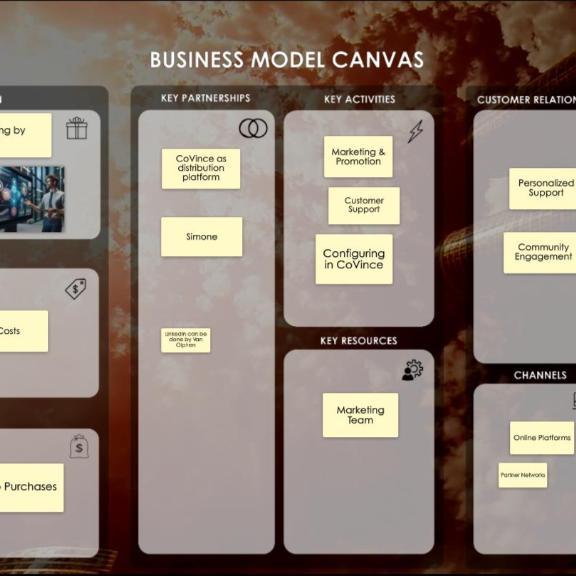
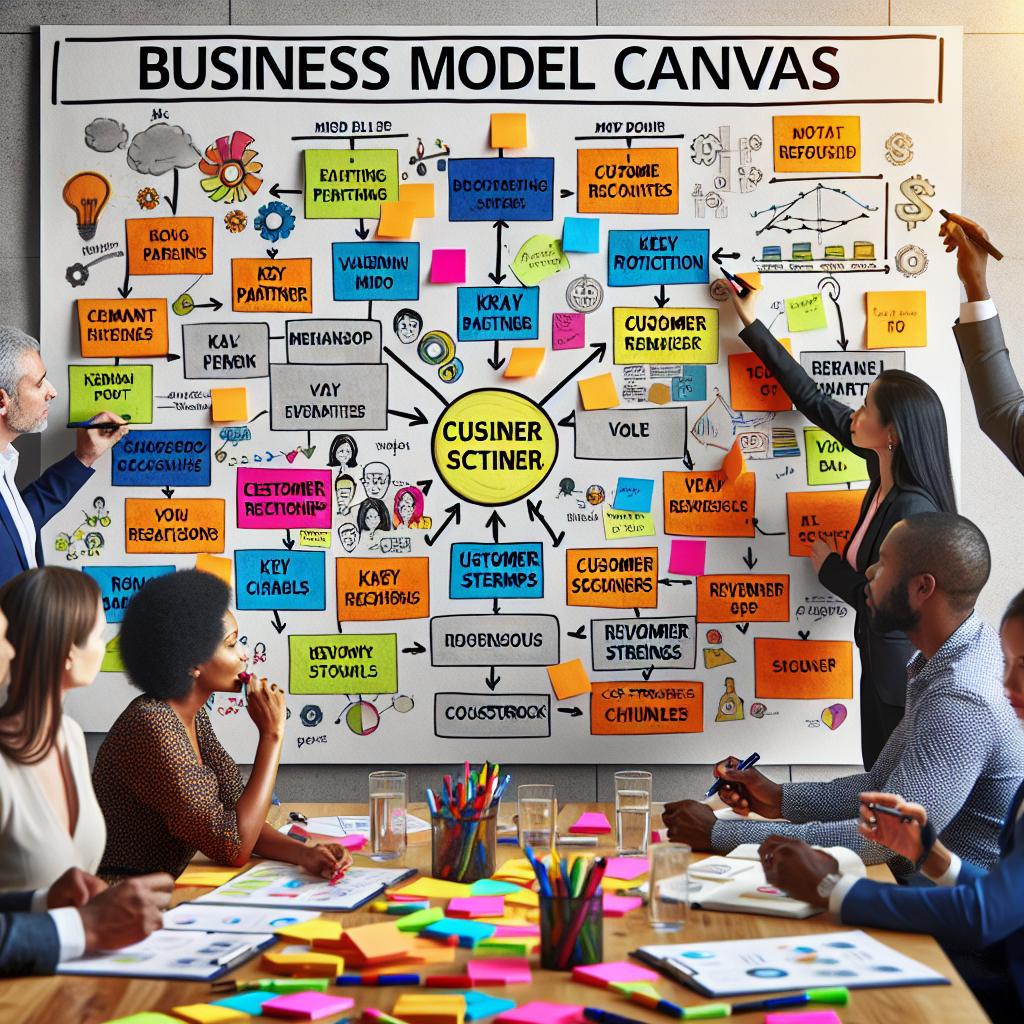
A Business Model Canvas is a visual framework for developing and documenting a business model. It helps entrepreneurs and businesses articulate their value proposition, target customer segments, revenue streams, cost structure, key activities, resources, and partnerships. The canvas provides a holistic view of the business and enables a comprehensive analysis and communication of its key elements.

The Business Model Canvas was created by Alexander Osterwalder and Yves Pigneur.

It consists of nine building blocks: customer segments, value proposition, channels, customer relationships, revenue streams, key resources, key activities, key partnerships, and cost structure.

The canvas is designed to be flexible and adaptable to different business models and industries.

How to use a Business Model Canvas?

To effectively use a Business Model Canvas, follow these steps:

1. Define your customer segments: Identify and understand the specific groups of customers your business targets.
2. Determine your value proposition: Define your unique offering that solves customers' problems or fulfills their needs.
3. Explore channels and customer relationships: Decide how you will reach and interact with your customers, including marketing and sales strategies.
4. Identify revenue streams: Determine how your business will generate income, whether through product sales, subscriptions, licensing, or other means.
5. Assess key resources and activities: Identify the essential resources and activities needed to deliver your value proposition and operate your business.
6. Establish key partnerships: Identify strategic alliances or collaborations that can support and enhance your business operations.
7. Analyze cost structure: Evaluate the costs involved in running your business, including fixed costs, variable costs, and economies of scale.
8. Iterate and refine: Continuously update and refine your canvas as your business evolves and adapts to changing market conditions and customer needs.

The Business Model Canvas provides a concise snapshot of a business model.

It encourages a holistic approach to business strategy and planning.

The canvas can be used to brainstorm and communicate ideas within a team or with stakeholders.

More backgrounds

5 Benefits of Adopting Business Model Canvas in Your Company
Integrating Lean Startup Principles with Business Model Canvas
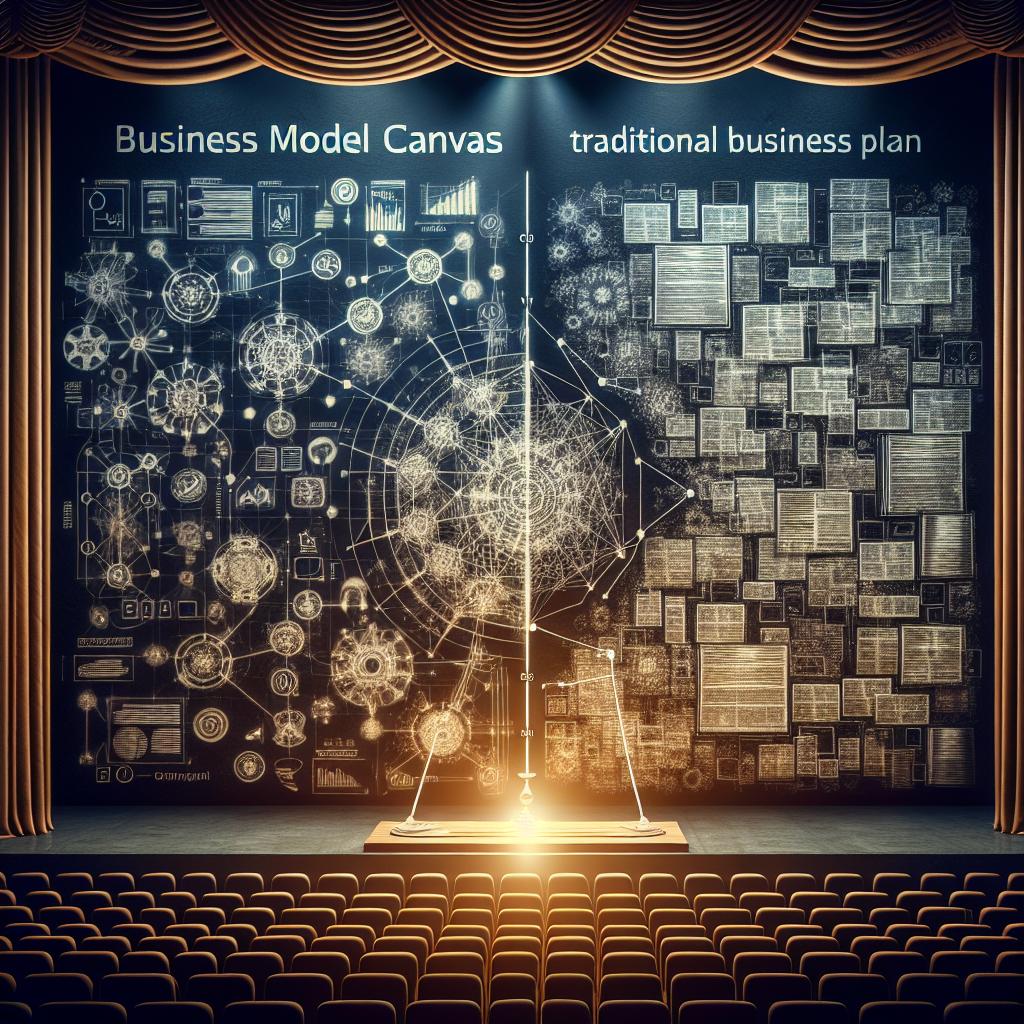
Business Model Canvas vs. Traditional Business Plans: A Comparison
Business Model Canvas (BMC): What is it and how do you use it?
What are the Key Resources in a Business Model Canvas (BMC)?
What are the Key Partners in a Business Model Canvas(BMC)?
Is business model canvas(BMC) a business plan?
Business Model Canvas explained for beginners

Try Yourself